
Academy Xi
Stash or Splash your money
Teaching children about financial independence.

The problem
Students have a general apathy to finances and banking
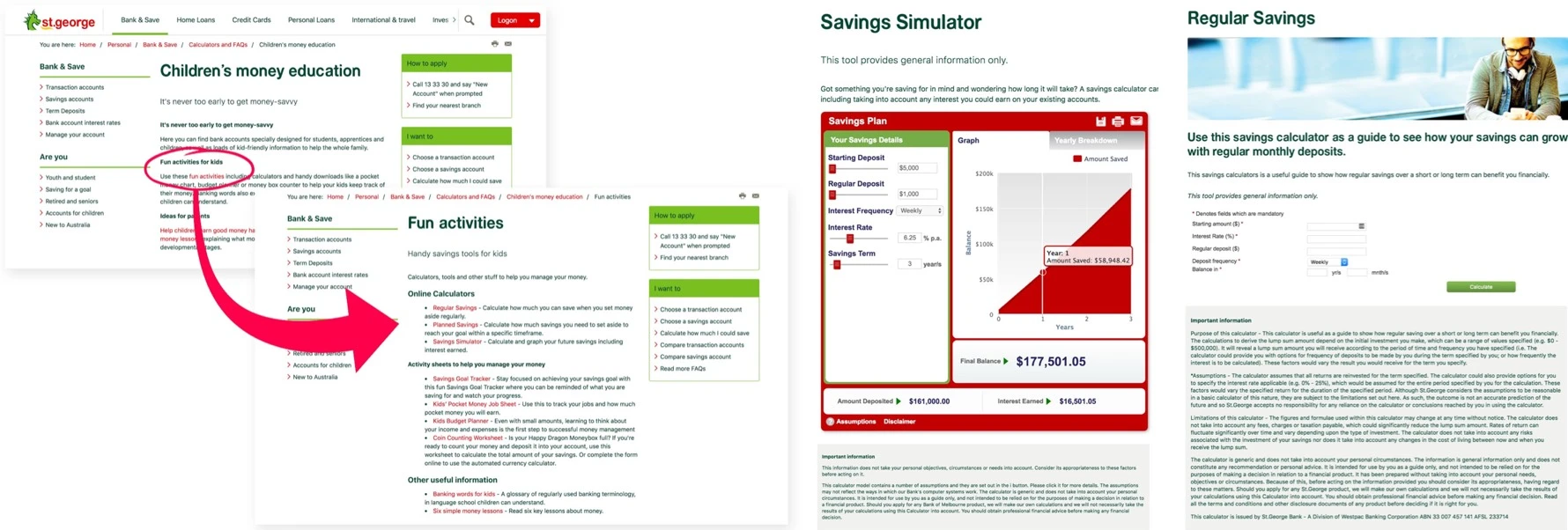
Students find the process of setting up their bank account uninspiring, and having to read through long emails just to get started is cumbersome and time-consuming. The example below, from a major bank's website, shows a gap in kid-friendly content - instead directing kids to "Fun activities," including a savings simulator geared to older audiences that kids wouldn't understand.
The hypothesis
Incentivise kids to take more responsibility for their own finances
How can we improve the onboarding experience for students so they feel confident with money matters? Students who engage with money matters early - talking with family, saving for a goal, interacting with their bank - are more likely to become financially independent and less stressed about money throughout their life.
The design process
-
In-depth interviews
Moderated interviews about banking and financial themes.
-
Affinity diagram
I organised the data collected into groups based on themes.
-
Journey map
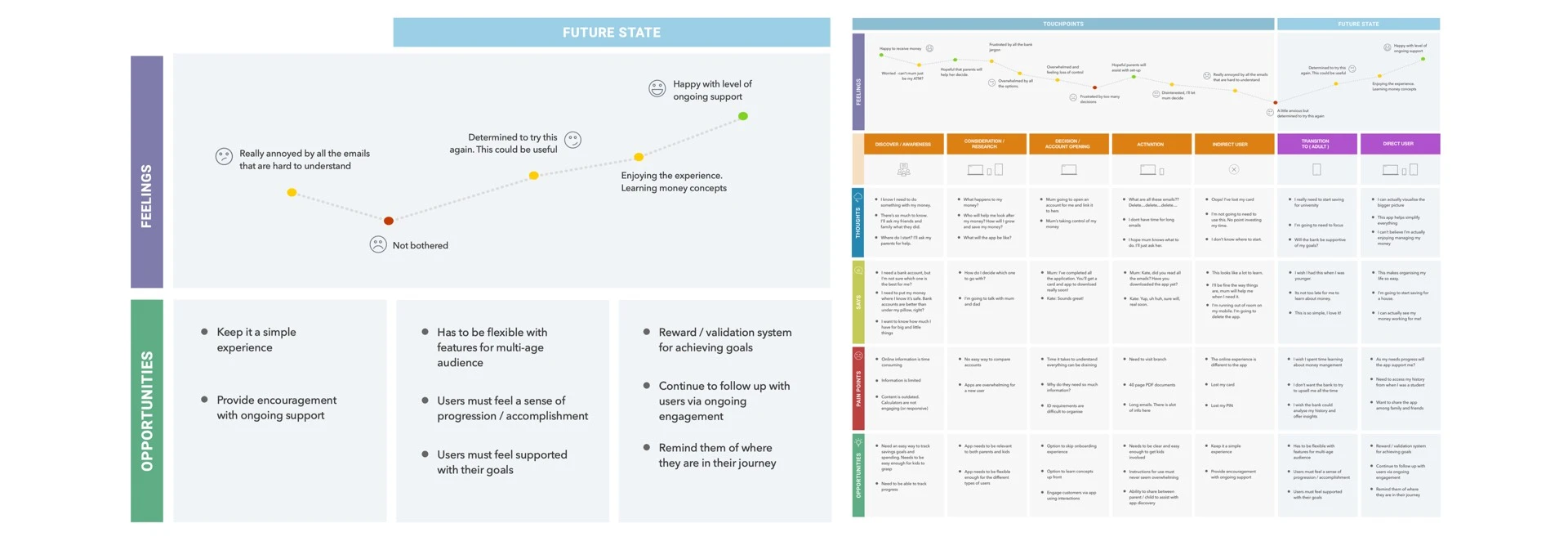
Helped unlock pain points and discover opportunities.
-
Competitor analysis
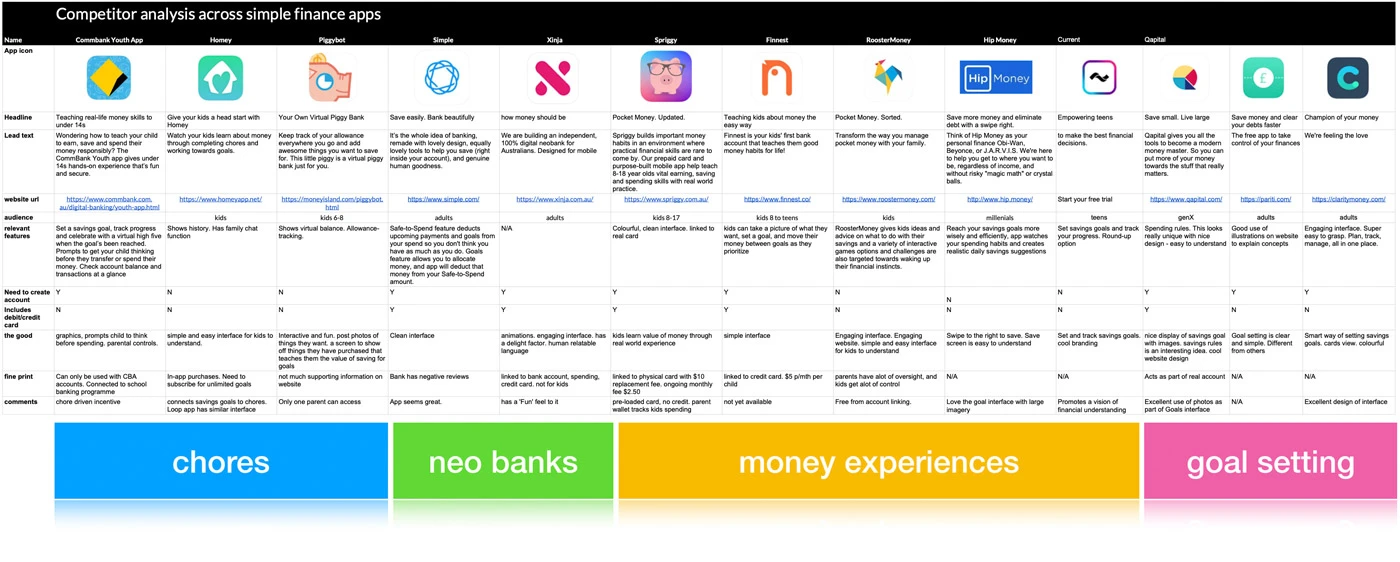
Reviewed financial apps to analyse the offerings available for kids.
-
User flows
Visualised the deliverables for the complete solution.
-
Interactive prototype
Gained early insights into the validity of the concept.
Research
Cashless Kate's journey
Kate is a 14-year-old student living in inner-city Sydney. She comes from a middle-income family, works part-time in her first job, and is very tech- and social-media-savvy. She needs help from her mum to manage her money, who is often heard responding, "What am I? An ATM?"
Wireframes
The design of the app
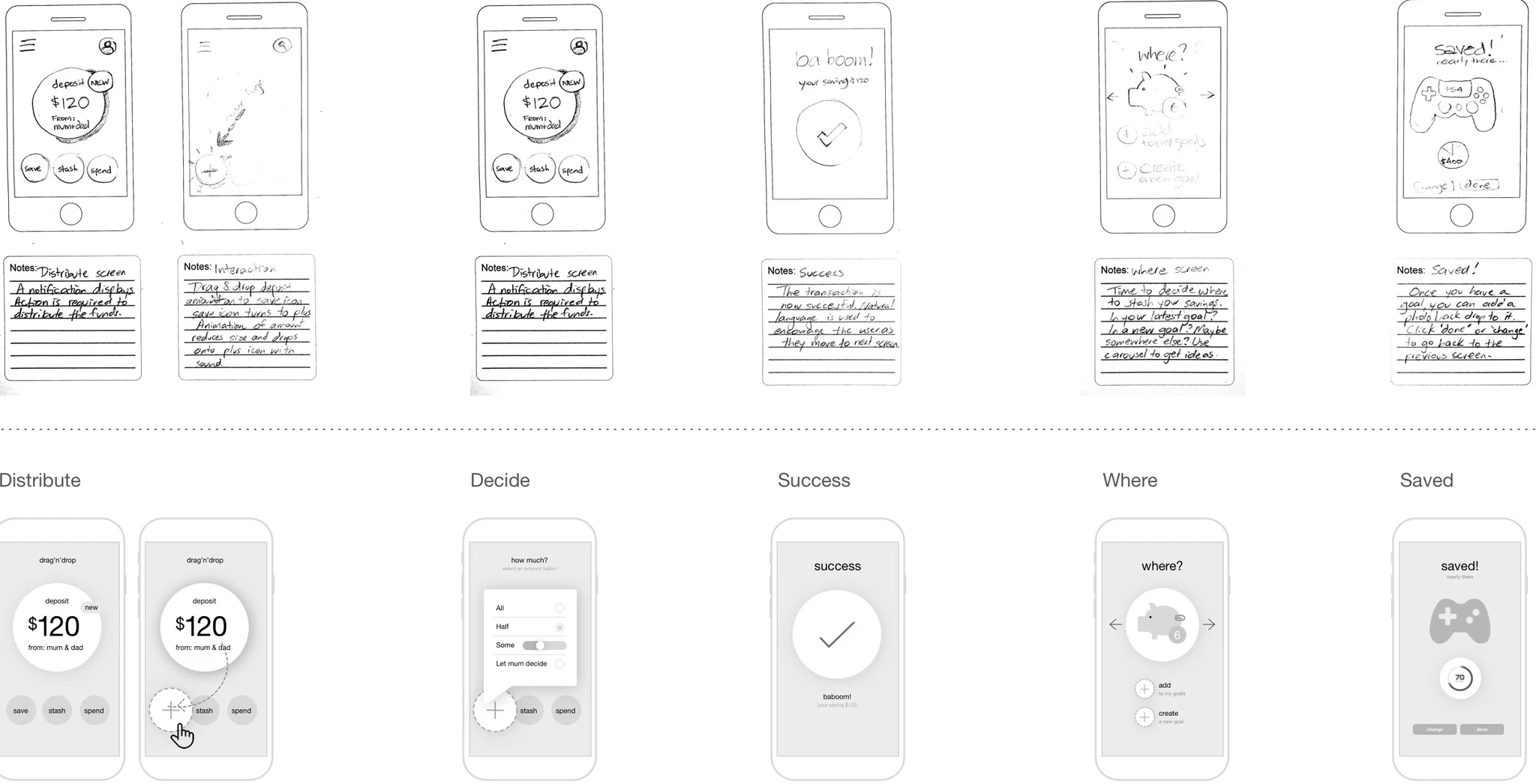
I decided to create an app aimed at helping people save money by taking on challenges and setting goals. The app is designed to help grow a user's savings balance - whether they're a beginner saver or just looking to start a new savings habit, this easy-to-use app is a fun and simple way to work toward a savings goal.
High fidelity designs
Solved, tested & pivoted
Feedback led me to pivot from an interaction perspective - while the interactions and ideas resonated with participants, the instructions were confusing. User testing validated that concepts could be taught during onboarding, along with the addition of a social interaction element.
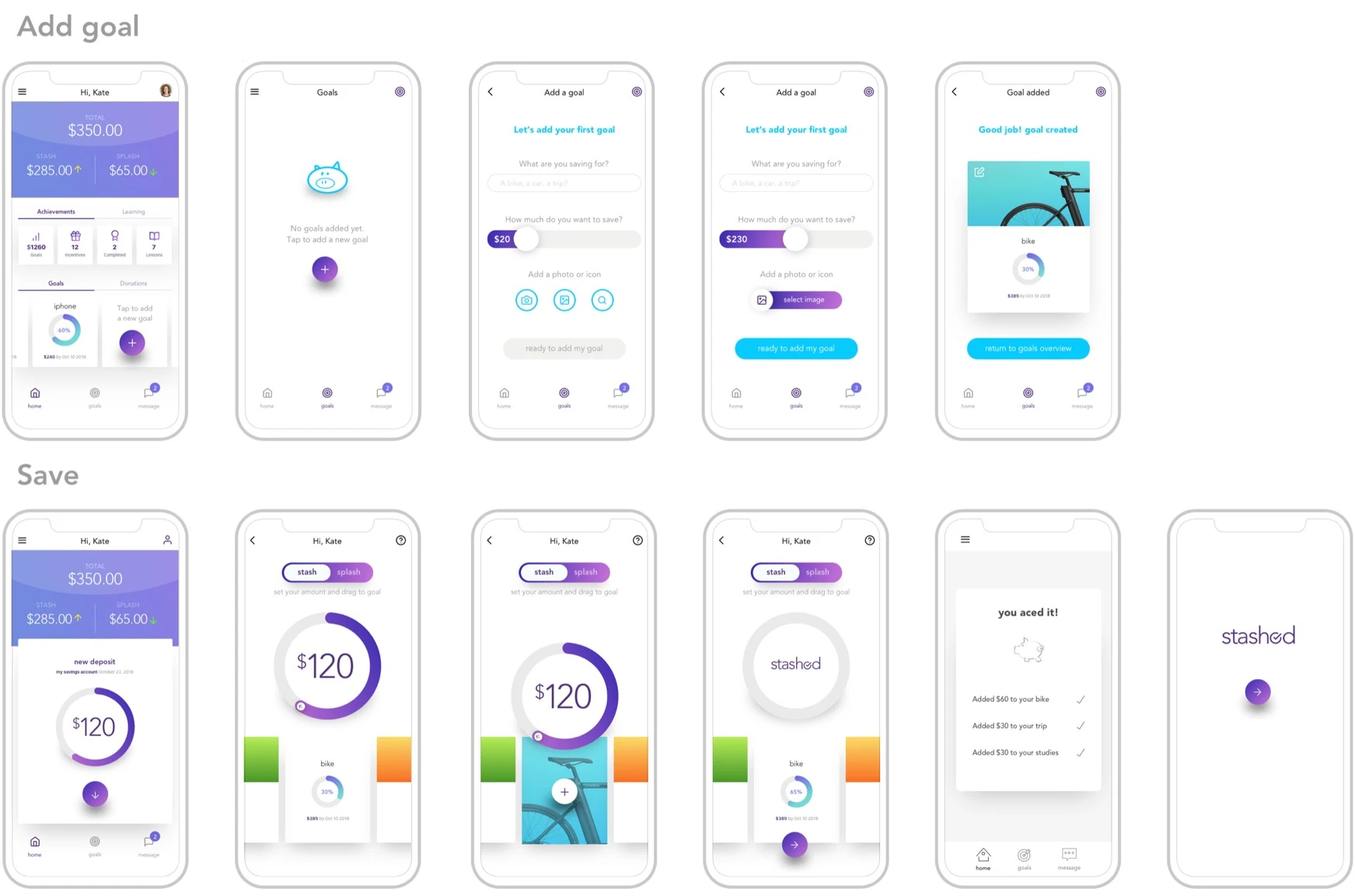
Prototype
Stash or Splash?
The concept came together as Stash or Splash - helping users grow their savings balance through challenges and goals, whether they're a beginner saver or already building a new savings habit.
Demo
Interactive prototype
The prototype below shows how the app tracks Kate's financial achievements. Of a total $350 in transactions, she has Stashed (saved) $285 and Splashed (spent) $65. The dashboard shows a notification that she's received a deposit of $200 - a birthday present, for example - and the next screen prompts Kate to decide how she wants to use it: Stash or Splash.
Using savings goals and incentives along the way, Kate is encouraged with reminders and savings milestones, reinforcing a positive savings habit. Engaging interactions add a touch of delight, helping Kate feel a sense of achievement and motivation toward her goals.
The final screen shows the updated overview, where Kate can celebrate her milestones and keep tracking her goals.
Insights
Students who engage with money matters early are more likely to build financial literacy and experience less stress about money throughout life.
- Involve
- Involving families will make it a social, bonding experience.
- Inform
- Give users intuitive insights so they can make informed decisions.
- Encourage
- Encourage kids with incentives and challenges set by parents.
- Flexibility
- Flexible features depending on the user's age and financial understanding.